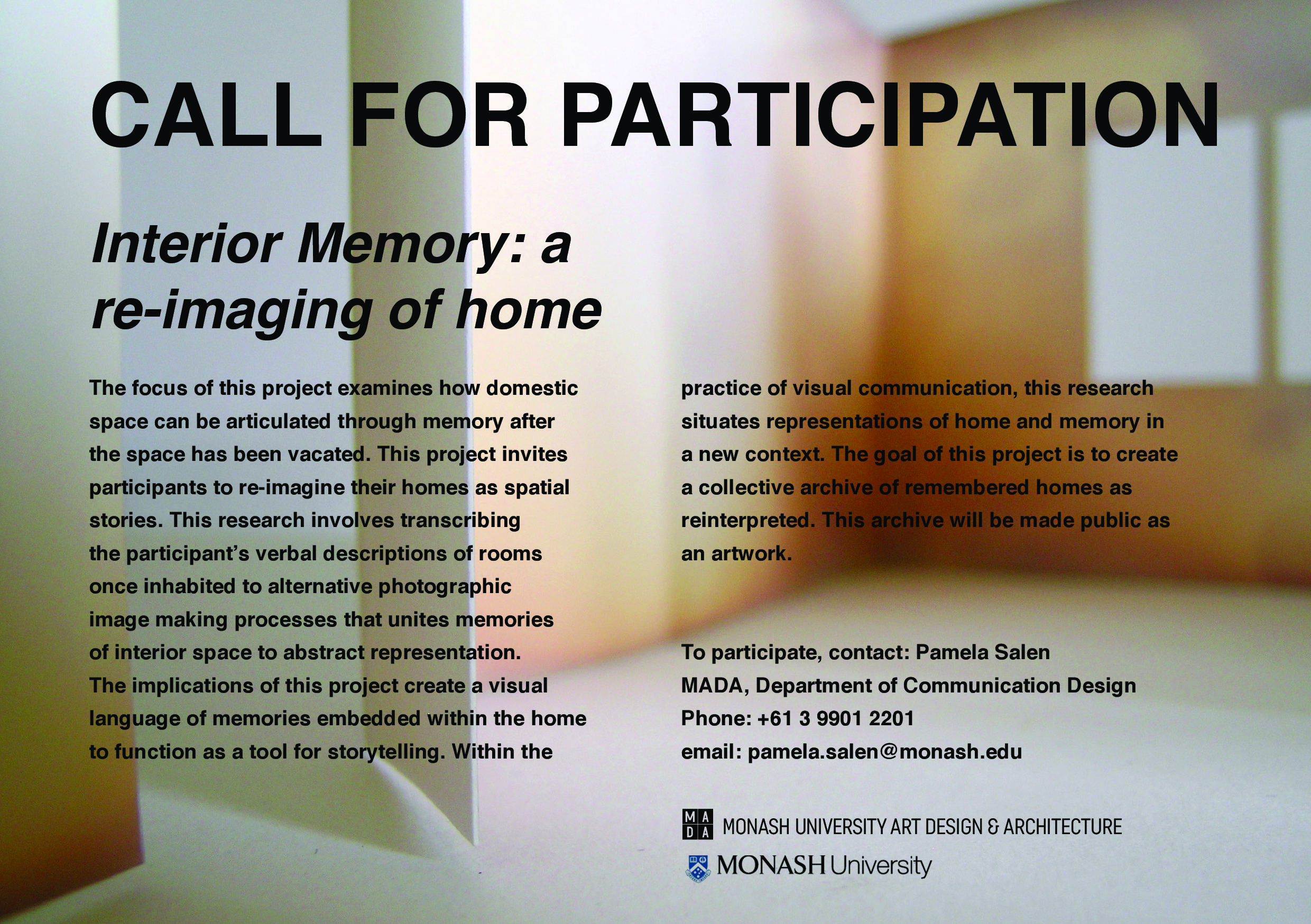
The focus of the research examines how domestic space can be articulated through memory after the space has been vacated. The researcher will transcribe the participant’s verbal descriptions of rooms once inhabited to alternative photographic image making processes that unites memories of interior space to abstract representation. The implications of this project create a visual language of memories embedded within the home to function as a tool for storytelling. Within the practice of visual communication, this research situates representations of home and memory in a new context. The goal of this project is to create a collective archive of remembered homes as reinterpreted. This archive will be made public as an artwork. The participant’s name and contact details will remain confidential.
This research will be conducted in two thirty-minute interview sessions, either in person or through a questionnaire, over a period of time agreed upon by both the researcher and the participant. The researcher will ask the participant to verbally describe from their memories a room or rooms from a past lived-in home. The interview will be recorded in written form, and with consent an audio recording, as a reference to the researcher in translating the descriptions to an image. During the second interview, the participant will be asked to respond to the visual images created by the researcher based on the descriptions recorded during the first interview. The anticipated results of this research will reveal that these images of the participant’s rooms will alter or trigger further memories within these spaces.
To participate, please contact: Pamela Salen, MADA, Department of Communication Design
Phone: +61 3 9901 2201
Email: Pamela.salen@monash.edu